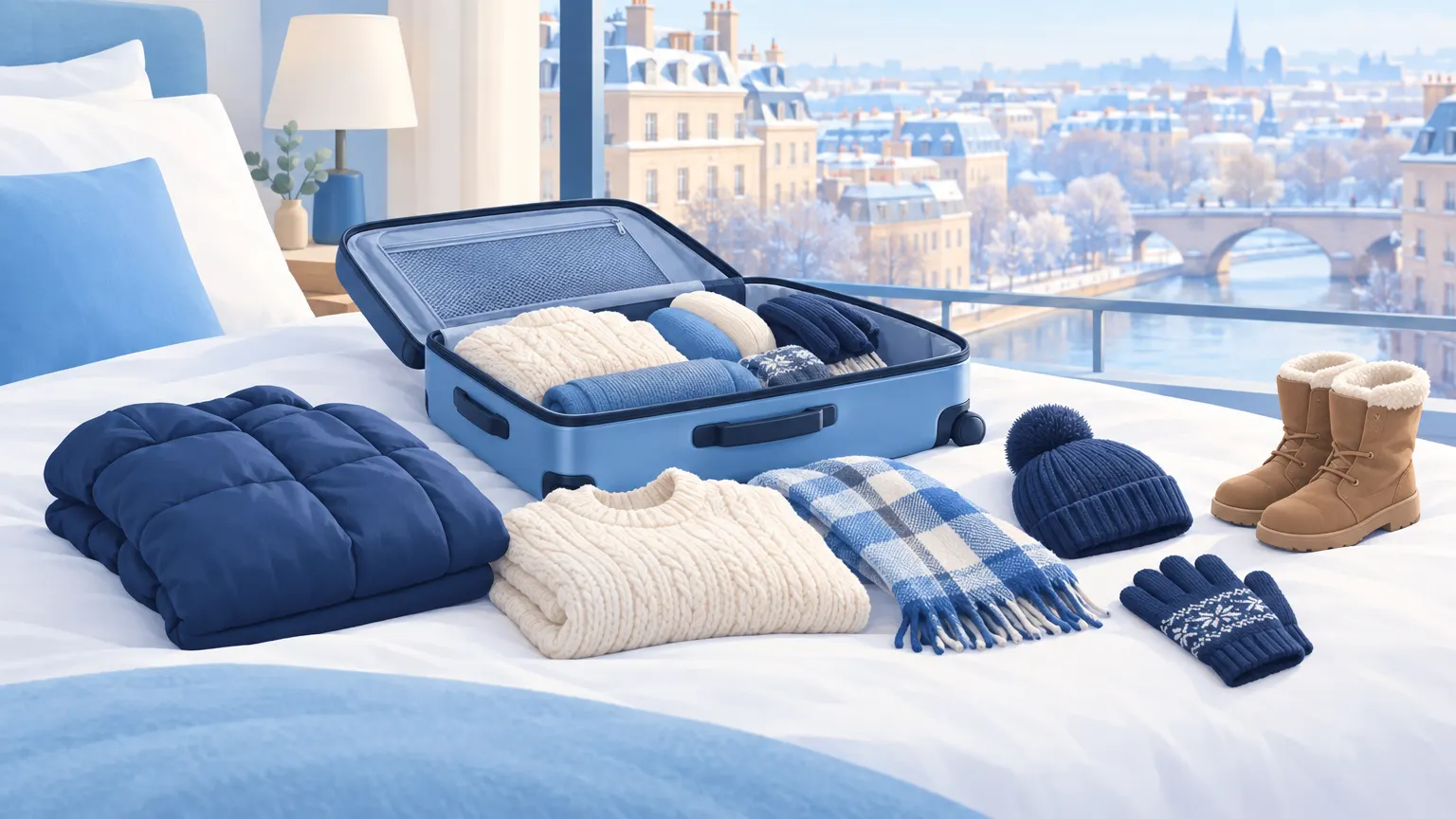
What to Pack for a Winter City Break: Layers, Rain and Cabin Bags
Layers, a waterproof outer shell and a bag that fits the airline's free limit cover most winter city breaks. The page also explains the new EU entry checks and what they mean at passport control.
Created by RoamoAI Updated 4 min read
In short
- Pack in layers you can combine, and wear the bulkiest coat and shoes on the plane.
- Plan the bag around the free allowance on a budget airline, and check the add-on options before you travel.
- Allow extra time at passport control, since the EU entry system records each visitor.
- Check the official entry sites before you go, because the travel authorization is not yet in use.
Most winter city breaks need less than people expect. A few warm layers, a waterproof outer shell and one bag that fits the airline's free limit cover most trips. This page covers how to pack for cold and wet days, what to wear on the plane, and what the cabin-bag rules mean for a budget flight, plus the EU entry checks that now apply to many visitors.
Pack in layers you can combine
Layers do more work than one heavy coat. Pack a warm base layer, a sweater or fleece you can add or take off indoors, and an outer shell that blocks wind and rain. Wear one of the layers on the plane and keep the rest for the city, where you can adjust as you go from cold streets to warm rooms.
Rain is the other half of the plan. A waterproof outer shell covers both wind and rain, and a compact umbrella is useful for short walks between sights. Keep wet gear in a plastic bag inside your bag so it does not soak the rest of your clothes.
What to wear on the plane
Wear your coat and heavier shoes on the plane, since packed they fill most of the bag. Wearing them leaves room for the rest of your clothes and keeps the bag easier to fit at the gate. Put a light scarf and gloves in a pocket so they are ready when you land.
Ryanair: the free bag and the cabin bag
As of November 18, 2026, every Ryanair fare includes one small personal bag of 40 x 30 x 20 cm, and it has to fit under the seat in front of you. Anything larger is a paid add-on.
Ryanair cabin bags, as of November 18, 2026
- Free bag included
- One small personal bag in every fare
- Free bag size
- 40 x 30 x 20 cm
- Where it must fit
- Under the seat in front of you
- Larger cabin bag
- Priority & 2 Cabin Bags or a similar add-on
The larger bag is an add-on: Priority & 2 Cabin Bags adds a 10 kg bag of 55 x 40 x 20 cm for the overhead locker, and the airline limits how many can be sold. Prices and limits change, so check the official bag page before you book.
Measure with a margin
Leave a few centimeters of margin, because a bag that is only just within the limit can fail the check at the gate. Pack evenly so no corner bulges, and use the outer pockets with care. Measure at home, since a bag that is too large at the gate leaves you with a problem you cannot fix there.
Entry checks at passport control
As of November 18, 2026, the EU Entry/Exit System (EES) has been fully operational since April 10, 2026. It replaces the stamping of passports for non-EU visitors on short stays. The system records your name, passport details, the date and place of each entry and exit, and your facial image and fingerprints, with no fingerprints for children under 12.
- It applies to nationals of countries outside the EU and Schengen Area who visit for a short stay.
- A short stay is up to 90 days within any 180-day period.
- Nationals of EU and Schengen countries are not affected by the procedure.
Plan extra time at passport control. ABTA advises allowing extra time at the border, and IATA notes that arrivals may go through additional border control steps. Ask your airline and airport how their checks are run before you travel.
Have your address ready
Keep the address where you are staying on your phone or on paper. Border staff may ask where you will be staying, so have it ready before you reach the desk.
ETIAS: not open yet
ETIAS is a travel authorization, not a visa. As of November 18, 2026, it is not yet operating, and you cannot apply for one. The EU has not set a start date and says it will announce one several months before the launch, so a trip this winter does not need one. Check the official Travel to Europe website before you fly.
No website can issue an ETIAS yet, so treat any offer to sell one as false. The French government and ABTA both warn about fake sites.
A packing list for cold, wet days
- A base layer, a warm middle layer and a waterproof outer shell
- A compact umbrella and a plastic bag for wet gear
- A warm hat, gloves and a scarf, worn on the flight
- Your passport and the address where you are staying
- One small personal bag that fits the free size limit
Check the airline's bag page
Read the official baggage page of your airline when you book and again shortly before you leave, since bag rules change.
Measure the bag with its extras
Measure the bag with its handles, wheels and straps in place, and leave a few centimeters of margin so it passes the sizer.
Wear the bulkiest items
Wear the coat and heavier shoes on the flight, and pack the rest in rolls or packing cubes that fit the bag's footprint.
Check the entry rules
Look up the EES details and the ETIAS status on the official EU travel website before you fly, and keep the address of your stay ready.
Keep it light
Packing cubes keep clothes organized and make the bag easier to carry through the airport. Pair them with wearing the bulkiest items, so the bag stays well inside its size limit.
Airline bag rules, fees and entry rules change. The figures on this page are as of November 18, 2026, so check the official pages on the day you book and again before you fly.
The aim is a bag you can carry up stairs at the station and that passes the gate without a second look. Layers do most of the work, and a short check of the official pages before you leave covers the rules that change.
Plan your next trip
Roamo builds a day-by-day plan, with times and travel between stops.
Questions travelers ask
What is the free cabin bag size on Ryanair?
As of November 18, 2026, Ryanair's help pages list one free small personal bag of 40 x 30 x 20 cm in every fare. It must fit under the seat in front of you. A larger cabin bag needs a paid add-on, such as Priority & 2 Cabin Bags.
Can I bring a wheeled suitcase on a Ryanair flight?
Not in the free allowance. As of November 18, 2026, the free item is one small personal bag, and a larger cabin bag needs the Priority & 2 Cabin Bags add-on or a similar product. The official bag page lists the add-on options, and the airline limits how many can be sold.
Does the EU entry/exit system apply to me?
It applies to nationals of countries outside the EU and Schengen Area who visit for a short stay of up to 90 days within any 180-day period. As of November 18, 2026, it has been fully operational since April 10, 2026. Nationals of EU and Schengen countries are not affected.
Do I need an ETIAS for a winter trip to Europe?
Not yet, because you cannot apply for one as of November 18, 2026. Once it starts, travelers who do not need a visa will apply online before they travel. The EU has not set a start date and says it will announce one several months before the launch, so a trip this winter does not need one.
How much does an ETIAS cost when it opens?
The fee is €20, with no fee for travelers under 18 or over 70, as of November 18, 2026. No website can issue an ETIAS yet, so do not pay any site for one now. Check the official Travel to Europe website for the current fee before you apply.
Sources
- European Union
- European Commission, Migration and Home Affairs
- France Diplomatie
- ABTA
- IATA
- Ryanair
5 sources read · 18 claims checked · November 18, 2026
Prices and opening hours change. Check the official site before you go.
More from the blog

Article 5 min read
How to Plan a Solo City Trip: Where to Stay, Your Days and the Border
Planning a city trip on your own comes down to three choices: where you sleep, how each day is built, and how you handle the airport and the border. This page takes each one in turn.

Article 4 min read
What to Pack for a Summer City Break: Dress Codes, Heat and Bag Limits
A summer packing plan for a hot city break, covering light clothes for walking, the covering a religious site can ask for, and how to check your airline's bag limits before you fly.

Guide 4 min read
Romantic City Breaks for Couples: Where to Go and When
Three cities for a couple's short break, picked for walkable old streets, water views and good places to sit down for a meal, with the season that suits Paris best.